.png)
Employee Breakroom Vending Options That Work
- ayanajohnson8
- 2 days ago
- 5 min read
A breakroom usually gets attention when something goes wrong. The coffee runs out, the snack shelf is empty, or employees start leaving the building because there is nothing convenient on-site. That is why employee breakroom vending options matter more than many workplaces expect. When people can quickly grab a drink, a snack, or a better-for-you choice without leaving the property, the workday gets easier and the breakroom becomes a useful amenity instead of wasted space.
For office managers, property managers, and operations teams, the question is not whether people want convenient refreshment access. They do. The real question is which setup makes the most sense for your location, your traffic, and your employees' habits. The best choice depends on how many people use the space, what they actually buy, and how much day-to-day oversight you want to take on.
Why employee breakroom vending options deserve a closer look
A vending program can seem simple from the outside, but the impact is practical and immediate. Employees lose less time leaving the building for small purchases. Visitors and tenants have something available without needing a staffed café. Breakrooms feel more complete, especially in offices where lunch options nearby are limited or inconsistent.
There is also a morale factor that should not be ignored. People notice when a workplace makes basic daily needs easier. Access to cold drinks, quick snacks, and familiar favorites helps create a more comfortable environment. It is not the only thing that shapes employee experience, but it is one of those everyday details that gets used constantly.
That said, not every vending setup works for every site. A machine that is perfect for a busy warehouse may be too limited for a professional office. A premium snack mix may underperform in one building and sell out in another. Good service starts with matching the option to the location.
The main types of employee breakroom vending options
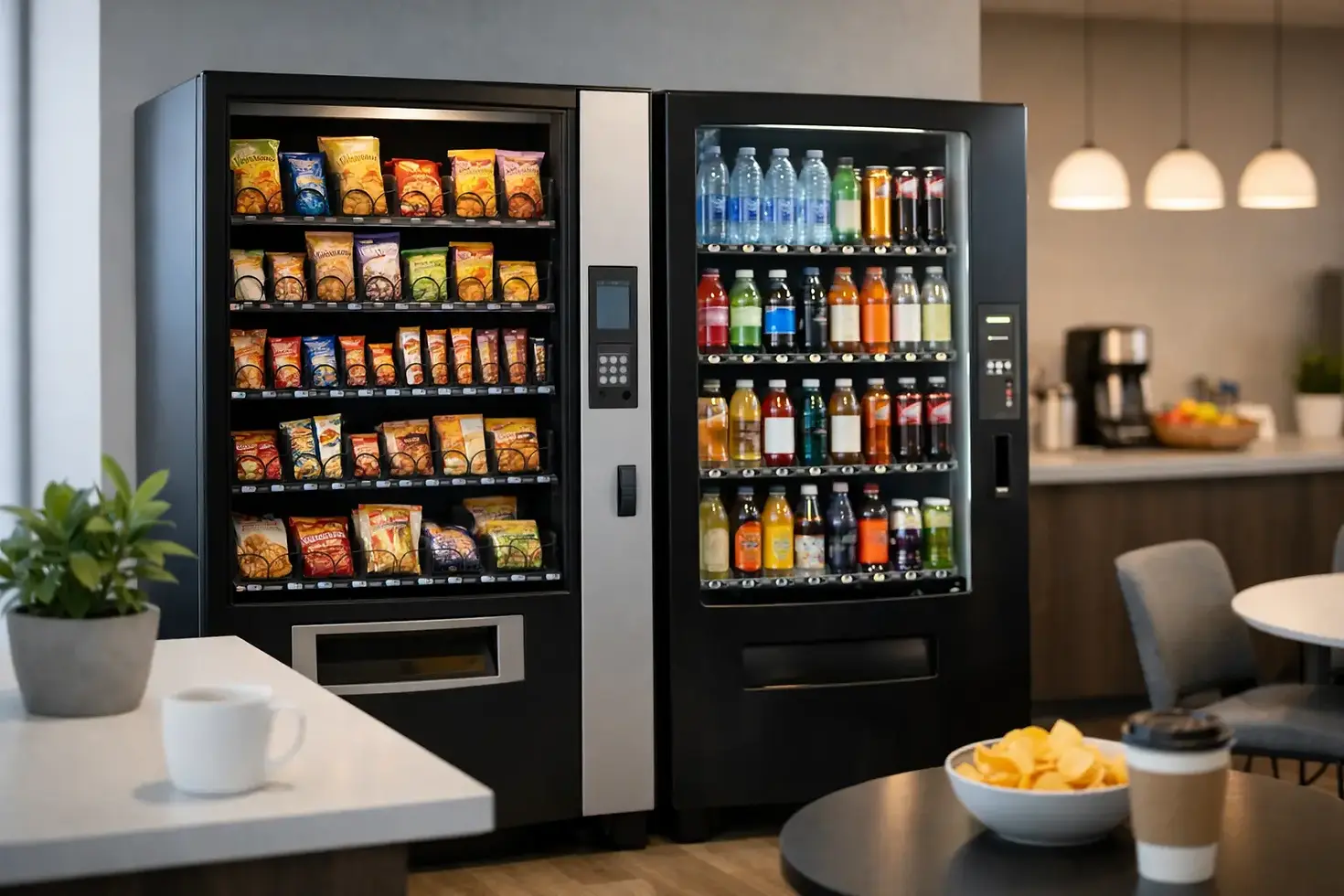
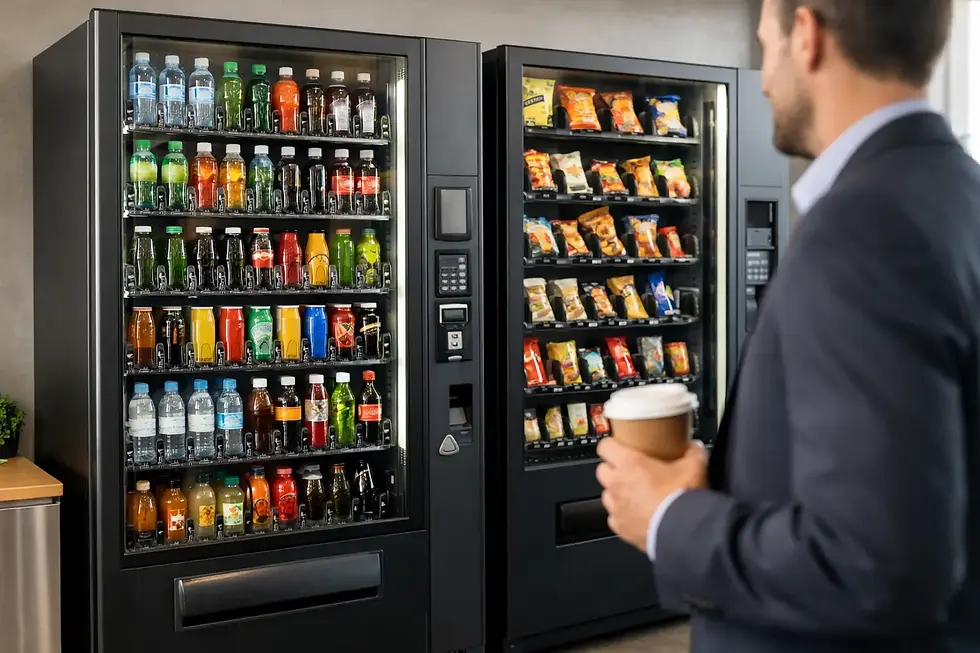
Most workplaces are choosing between snack vending, beverage vending, or a combination of both. In many cases, the combination delivers the best result because it covers the purchases people make most often during the workday. A snack machine handles chips, candy, pastries, protein bars, and other grab-and-go items. A drink machine covers bottled water, soft drinks, sports drinks, sparkling beverages, juice, and energy drinks.
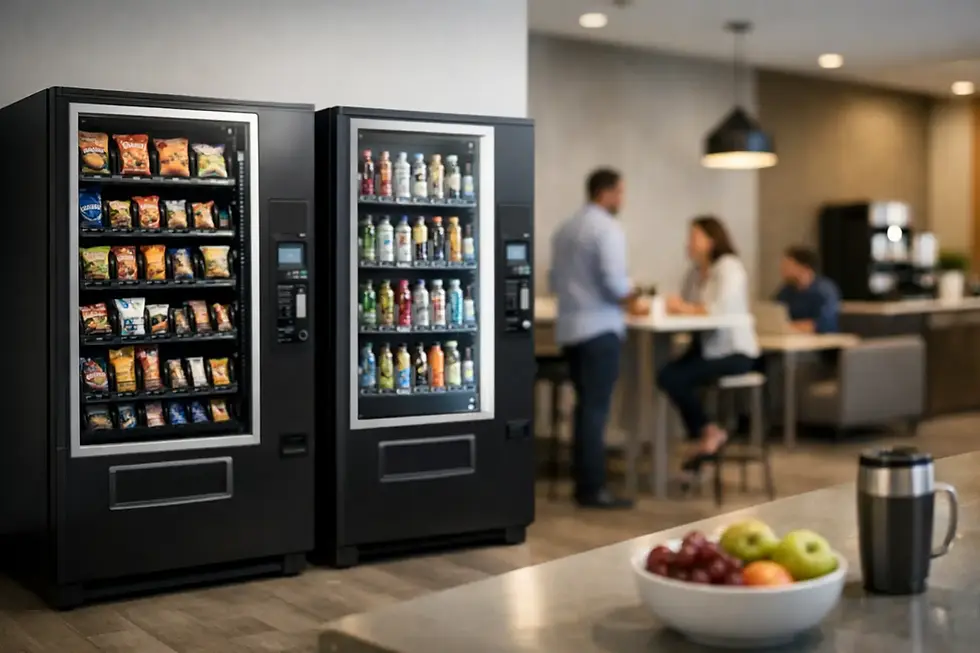
If your workplace has steady foot traffic throughout the day, both machines usually make sense. Employees rarely think about refreshments in categories. They think in moments. They want a cold drink in the afternoon, something quick before a meeting, or a snack during a short break. A split setup forces them to go elsewhere for part of what they want.
Healthier product mixes are also worth discussing early. Many businesses assume vending means only candy and soda, but a well-planned machine can include bottled water, zero-sugar drinks, nuts, granola bars, baked chips, and other lighter options. The right balance matters. If a machine is stocked only with "healthy" items people do not actually buy, sales drop and the amenity loses value. If it is stocked only with indulgent items, you may miss what a large part of your workforce wants. In most locations, the strongest approach is a mix of familiar favorites and better-for-you choices.
What makes one vending setup better than another
The biggest difference is not just the machine. It is the service behind it.
A modern machine with card readers and mobile payment capability removes a lot of friction. Many employees do not carry cash, and a cash-only machine often gets ignored even when the products are appealing. Easy payment options make the breakroom more useful from day one.
Reliable restocking is just as important. Empty spirals and sold-out drinks send a message that the amenity is not being managed well. On the other hand, a consistently stocked machine builds trust quickly. Employees learn they can depend on it, and usage follows.
Product selection matters too, but not in the way some buyers assume. The goal is not to offer every possible item. The goal is to stock the right items for the people in that building. A law office, manufacturing site, medical facility, and mixed-use commercial property may all have very different buying patterns. Good vending service pays attention to that.
Equipment appearance also plays a role. A clean, modern machine fits the workplace better than an older unit that looks dated or poorly maintained. In client-facing environments, that matters even more. Breakroom amenities reflect on the overall property experience.
How to choose the right fit for your workplace
Start with volume. If your site has regular employee traffic and people already bring up food or beverage convenience, vending is likely a practical option. The more consistent the traffic, the easier it is to support a machine with a strong rotation of products.
Then think about break habits. Do employees have nearby food options, or do they need quick access on-site? Are breaks short? Do teams work across shifts? Workplaces with limited nearby retail, larger footprints, or shift-based schedules tend to benefit the most because leaving the property is less convenient.
Space is another factor, but it is rarely the obstacle people think it is. Many locations can accommodate a snack machine, a beverage machine, or both in an existing breakroom or common area. The more important question is whether the placement is visible, accessible, and easy to use without disrupting workflow.
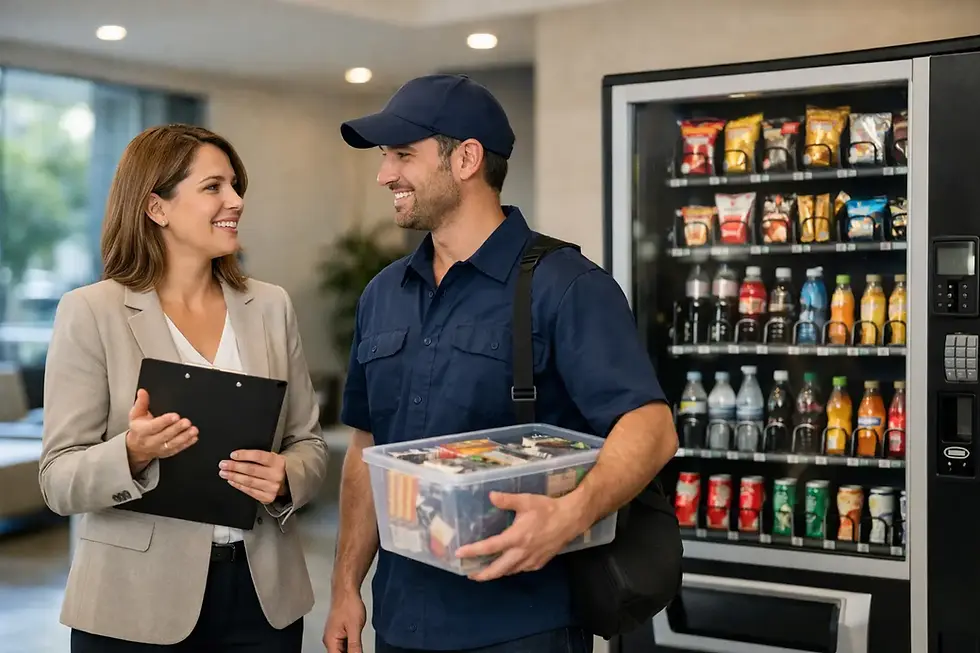
You should also consider who will manage the service experience. If you want a low-maintenance amenity, a full-service vending provider is usually the better route than trying to source products and monitor equipment internally. That reduces the burden on office or facility staff and keeps the breakroom from becoming one more task on someone's list.
Common concerns business buyers have
One common concern is whether enough employees will use the machines. That depends on traffic, product mix, and convenience. In many workplaces, usage grows after employees see that the machines are stocked with recognizable items and work reliably. A poor vending experience can turn people away, but a good one becomes part of the routine.
Another concern is product quality. Business buyers do not want a machine filled with random items that sit too long or do not fit the workforce. That is a fair concern. A better vending partner pays attention to what moves, what does not, and how to adjust the mix over time.
Some companies also worry that vending feels too basic compared to other breakroom amenities. In reality, it often works precisely because it is practical. Not every workplace needs a full pantry program or staffed foodservice setup. For many locations, vending is the right middle ground - easy to install, easy to use, and useful every day.
Employee breakroom vending options and workplace experience
A good breakroom does not need to be elaborate. It needs to be dependable. When refreshments are easy to access, people spend less time solving small inconveniences and more time staying focused on their day.
That practical value is why employee breakroom vending options are often a smarter workplace upgrade than they first appear. They support comfort without creating extra operational work. They give employees and visitors immediate access to what they actually want. And when the service is handled well, they quietly improve the rhythm of the workday.
For Atlanta-area businesses that want a refreshment solution that is simple, modern, and easy to maintain, K & A Vending Solutions LLC helps create breakroom access that feels like a real workplace benefit, not an afterthought.
If your current breakroom feels underused or incomplete, the right vending setup can change that quickly. Sometimes the most appreciated workplace improvements are the ones people use every single day.
Comments