.png)
Vending Machine vs Pantry Service at Work
A breakroom usually gets attention only when something is missing. The coffee runs out, the snack shelf is empty, or employees start leaving the building because there is nothing convenient onsite. That is usually when the vending machine vs pantry service question comes up. For many Atlanta-area workplaces, the right answer depends less on trend and more on how your location actually operates day to day.
Both options can improve the employee experience. Both can make your property feel more thoughtful and functional. But they work very differently in terms of cost, management, variety, and long-term practicality. If you are deciding what makes sense for your office, facility, or commercial property, it helps to look at the trade-offs clearly.
Vending machine vs pantry service: what is the difference?
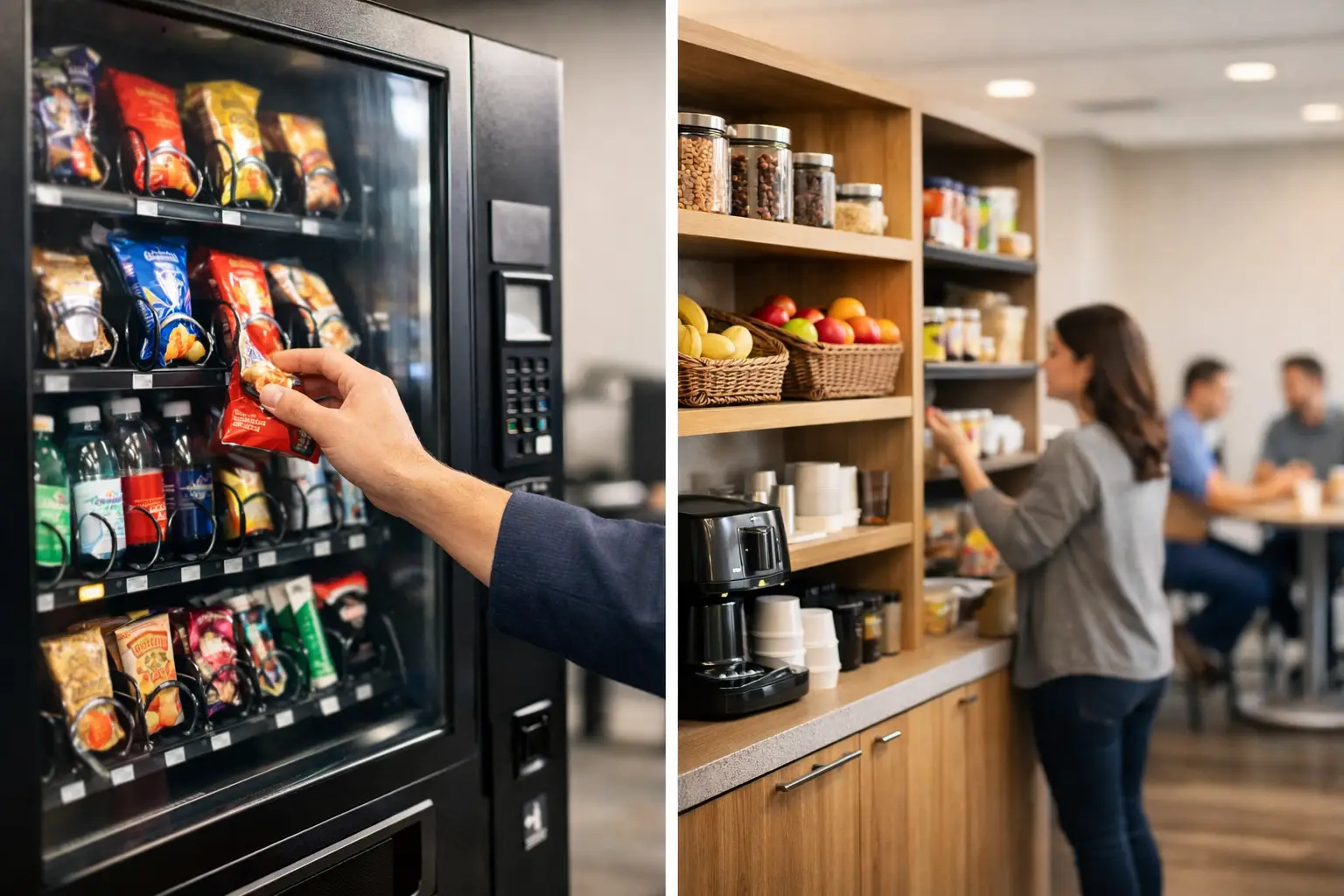
A vending machine service gives employees, visitors, or tenants access to snacks and drinks through self-serve equipment. Products are stocked and maintained by the vending provider, and users pay at the machine, usually with cashless options available. For the business, that means refreshment access without having to buy, store, or manage inventory internally.
A pantry service is different. The employer usually pays for food and beverages upfront and offers them free to employees in a shared kitchen or breakroom setup. Depending on the arrangement, pantry items may include coffee, bottled drinks, chips, granola bars, fresh snacks, or even more premium options. The goal is often to create a hospitality-style perk rather than a pay-as-you-go convenience station.
On the surface, both can solve the same problem: people need quick access to refreshments during the workday. The real difference is who pays, who manages it, and how predictable the system is over time.
When vending makes more sense
For many workplaces, vending is the more efficient choice because it keeps the amenity simple. Employees get convenient access to products they actually want, while the business avoids the ongoing burden of purchasing and monitoring snack inventory. That matters more than many managers expect.
In a busy office or multi-tenant property, refreshment use can be hard to predict. One week, bottled water disappears. The next week, it is energy drinks and chips. With vending, those patterns can be managed through product rotation and restocking without creating extra work for your team. A good provider handles the machine, the service schedule, and the product mix.
Vending also tends to work well in locations with mixed traffic. If your building serves employees, guests, vendors, and visitors, a paid vending setup is often more practical than trying to offer free pantry items to everyone who walks through the space. It creates access without putting the full cost on the business.
There is also the issue of control. Modern vending equipment supports cleaner organization, secure product storage, and straightforward payment. That can make the breakroom feel more reliable than an open pantry that gets picked over or emptied faster than expected.
When pantry service is the better fit
Pantry service can be a strong option when the company wants to treat refreshments as a fully funded employee benefit. In some workplaces, that makes perfect sense. A small office with a stable headcount may find it easy to budget for snacks and drinks each month, especially if leadership sees it as part of recruiting, retention, or culture.
Pantry setups can also feel more personal. Free coffee, grab-and-go snacks, and stocked refrigerators create a welcome atmosphere, particularly in offices where people spend long hours onsite. If your goal is to make the breakroom feel more like an extension of company hospitality, pantry service may support that better than a vending machine alone.
That said, pantry service usually works best when there is a clear internal owner. Someone still needs to watch usage, prevent waste, and make sure the space stays clean and supplied. Even if an outside provider helps with deliveries, the company is typically paying for every item whether it is consumed thoughtfully or not.
Cost is where the difference gets real
The biggest factor in the vending machine vs pantry service decision is often cost structure.
With vending, the business generally avoids direct product expense because users purchase what they consume. That makes budgeting easier. Instead of guessing how much the office will eat and drink each month, the company provides the amenity while the ongoing usage cost stays with the end user.
With pantry service, the employer absorbs the full cost. That may be manageable in a small team, but as headcount grows, pantry spending can rise quickly. Consumption is rarely consistent, and once people get used to free snacks and drinks, scaling back can be unpopular.
There is also hidden waste to consider. Pantry items are more likely to be taken in bulk, left open, or consumed casually because there is no direct transaction attached to them. Vending naturally creates a little more discipline. People choose what they want, when they want it, and inventory moves in a way that is easier to track.
If your workplace wants a refreshment solution that feels valuable without becoming a moving budget target, vending often has the advantage.
Management time matters more than most teams expect
Decision-makers often compare product cost and stop there. But operational effort matters too.
A pantry can sound simple until the office manager starts dealing with out-of-stocks, cluttered shelves, expired products, refrigerator mess, and constant employee requests. Even in well-run offices, pantry management can become one more task that lands on an already busy team.
Vending is usually easier because the service model is built for low involvement. The equipment stores products neatly, payment happens automatically, and restocking is handled by the provider. If the machine is modern and the service is dependable, the day-to-day burden on your staff is minimal.
That low-maintenance aspect is a major reason many workplaces prefer vending. It gives people access to refreshments without turning your internal team into breakroom managers.
Product variety and employee satisfaction
Employees care less about the label on the service and more about whether the options are good. If the choices are limited, outdated, or rarely stocked, the breakroom will still feel underwhelming.
A pantry can offer flexibility, but only if someone is actively curating it. Otherwise, it often defaults to the same bulk purchases over and over again. Vending can sometimes be seen as less personal, but that is only true if the machine is poorly managed.
A well-serviced vending program can include popular snacks, candy, cold drinks, water, energy drinks, and better-for-you choices that reflect actual workplace demand. That mix matters. Employees want familiar favorites, but they also want enough variety to match different schedules and preferences.
This is where service quality becomes the deciding factor. Reliable vending is not just about having a machine in the corner. It is about keeping that machine stocked with products people genuinely buy and making payment easy. That is what turns vending from a basic convenience into a workplace amenity people appreciate.
Choosing between vending machine vs pantry service for your location
The best option usually comes down to three questions: how many people use the space, who should pay for refreshments, and how much internal management time you want to commit.
If you run a larger office, commercial property, warehouse, or high-traffic environment, vending is often the cleaner fit. It supports convenience, controls cost, and reduces internal workload. It also works well when visitors or multiple user groups need access to snacks and drinks.
If you manage a smaller office with a tight-knit team and a defined budget for employee perks, pantry service may be worth considering. It can create a more hospitality-driven feel, especially when leadership wants to offer free refreshments as part of the workplace experience.
There is also a middle-ground option in some settings. Some businesses keep a limited pantry for basics like coffee while using vending for snacks and cold beverages. That balance can give employees a sense of care without putting the full burden of snack and drink consumption on the company.
For many businesses, though, the smartest answer is the one that can be sustained. A vending program that stays stocked, works properly, and offers convenient payment will usually outperform a pantry that starts strong but becomes expensive or inconsistent over time.
K & A Vending Solutions LLC works with workplaces that want that kind of dependable setup - something practical, easy to manage, and genuinely useful to employees and visitors.
A good breakroom solution should make the day easier, not create another problem to manage. If you are weighing convenience against cost, the better choice is usually the one your team can rely on month after month.


Comments