.png)

How to Improve Tenant Amenities That Matter
A tenant walks through the lobby, heads to the office suite, and realizes the closest place to grab a cold drink is a ten-minute drive. That small inconvenience adds up fast. When property managers ask how to improve tenant amenities, the best answers usually are not flashy. They are practical, visible, and easy for people to use every day.
In office buildings and commercial properties, amenities work best when they remove friction from the workday. Tenants want spaces that help employees stay comfortable, take short breaks, and handle basic needs without leaving the property. For decision-makers, that means choosing improvements that raise satisfaction without creating extra maintenance headaches or major capital costs.
Why tenant amenities need to solve daily problems
The most effective amenities are not always the most expensive. A rooftop lounge may look impressive on a brochure, but if tenants are asking for easier access to drinks, snacks, and quick refreshment options, the bigger opportunity may be much simpler.
That is where many property teams miss the mark. They focus on amenities that photograph well instead of amenities that get used. A comfortable, functional break area with dependable vending can have more day-to-day value than a feature tenants rarely visit. People remember what makes their workday easier, especially in buildings where convenience is limited nearby.
There is also a leasing and retention angle. Amenities help shape how tenants view the overall property experience. When common areas feel neglected or basic conveniences are missing, it reflects on the building. On the other hand, when the property supports employee comfort in practical ways, it signals attentive management.
How to improve tenant amenities with practical upgrades
If you are looking at how to improve tenant amenities, start with the spaces and moments tenants use most. That usually means entry areas, shared break zones, office common areas, and places where people pause between meetings or during the middle of the day.
A strong amenities strategy begins with access. Tenants should not have to work hard to use what you provide. If food and beverage options are part of the plan, they need to be placed in convenient, high-traffic areas and available during the hours people actually need them. An amenity hidden in a remote corner of the building will never perform the same way as one located near natural foot traffic.
Just as important is ease of use. Modern users expect simple payment options, clear product visibility, and equipment that works consistently. If a machine only takes cash, frequently jams, or sits half-stocked, it becomes a frustration instead of a benefit. Reliability matters as much as the amenity itself.
Refreshment access is one of the most overlooked amenities
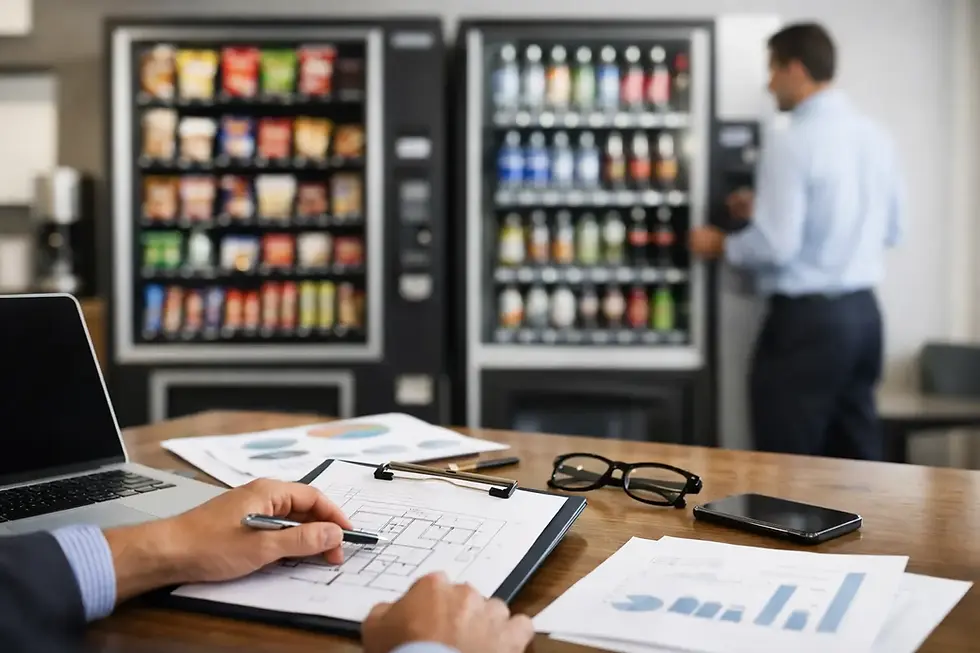
For many commercial properties, onsite refreshments are not treated like a serious amenity category, but they should be. Employees, visitors, contractors, and tenant teams all notice when they can quickly grab a snack, water, soft drink, or energy drink without leaving the building.
This is especially true in office parks, multi-tenant buildings, industrial offices, medical-adjacent properties, and workplaces with limited walkable retail nearby. In those settings, vending fills a very real gap. It supports short breaks, helps people stay on site, and gives tenants a practical convenience they can point to when evaluating the building experience.
There is also flexibility in how you approach it. Some properties benefit from a small, well-placed snack and beverage setup in a breakroom or shared lounge. Others need multiple access points based on traffic patterns and tenant mix. The right setup depends on your building size, occupancy, and how people move through the space during the day.
What tenants actually want from amenities
Amenities should reflect real behavior, not assumptions. Most tenants are not asking for more complexity. They want convenience, comfort, and consistency.
That means refreshment options should include familiar favorites, but also a broader mix that reflects different preferences. Traditional snacks and soft drinks still matter, but so do bottled water, energy drinks, lighter snack options, and products that feel current for today’s workplace. A curated product mix makes a difference because people notice when selections feel relevant instead of random.
Cleanliness also plays a major role. Even a modest amenity area can feel high quality if it is tidy, well lit, and maintained. A neglected area sends the opposite message. If you want an upgrade to support tenant satisfaction, it has to feel intentional.
Reliable service is part of the amenity
One of the biggest trade-offs in amenity planning is deciding whether a feature will create more work for your team. That is a fair concern. Some upgrades sound good at first but turn into ongoing oversight, service calls, and tenant complaints.
That is why low-maintenance amenities often deliver the best long-term value. With vending, the experience depends heavily on the service behind it. Modern equipment is important, but regular stocking, responsive maintenance, and dependable support are what keep the amenity useful.
A poorly managed vending setup can hurt the tenant experience just as quickly as a well-managed one can improve it. Empty spirals, broken card readers, and inconsistent service create frustration. A dependable provider removes that burden from property staff and gives tenants something they can actually count on.
Balancing budget, space, and impact
Not every property has the same budget or physical layout, so there is no single formula for how to improve tenant amenities. The better approach is to prioritize improvements that offer visible value without overcomplicating operations.
Refreshment amenities often fit that goal because they do not require a major buildout to make an impact. A thoughtfully placed vending area can improve convenience right away, especially compared to larger amenity projects that require significant construction, approvals, or ongoing staffing.
Space is another consideration. In a compact office building, one centrally located area may be enough. In a larger property, tenants may need access on more than one floor or in multiple common areas. Placement should follow tenant behavior, not just available square footage.
It also helps to think about who uses the building. An office with daytime traffic may need a broad mix of drinks and quick snacks. A property with visitors and waiting areas may benefit from options that support both employees and guests. The most effective amenity plans reflect the actual audience on site.
Small upgrades can improve the full property experience
Tenant amenities are not just about one transaction or one break. They influence how people feel about the building across the day. When employees can handle a mid-afternoon snack run without leaving the property, that feels convenient. When visitors can easily buy a cold drink while waiting, that feels thoughtful. When office managers are not fielding complaints about limited options nearby, that feels like a better-run location.
This is where simple amenities can outperform more expensive ones. They are used often, appreciated immediately, and tied directly to comfort and convenience. They also support the tenant’s own goals. Employers want people to have a smoother workday. Property teams want the building to feel functional, attractive, and well supported. Practical amenities help both.
For Atlanta-area properties, where schedules are busy and convenience matters, dependable onsite access to snacks and beverages can be a strong quality-of-life improvement. It is not about turning a commercial property into a luxury destination. It is about making the space work better for the people who use it.
Choosing amenities that are easy to maintain
The best amenity decisions hold up after the rollout. Before adding any feature, ask a simple question: will this still feel like a benefit six months from now, or will it become another issue to manage?
That question often separates high-value upgrades from costly distractions. Amenities that are easy to access, easy to maintain, and useful across a wide group of tenants tend to deliver stronger results. They support satisfaction without asking property teams to become full-time operators.
For that reason, many property managers are putting more attention on turnkey convenience solutions. A modern vending setup with cashless payment, appealing selections, and dependable service can support the building experience without placing extra strain on internal staff. For companies like K & A Vending Solutions LLC, that service-first model is what turns vending from a machine in the corner into a real workplace amenity.
If you are deciding how to improve tenant amenities, start with what people will notice on an ordinary Tuesday. That is usually where the best value is found.


Comments