.png)

How to Improve Breakroom Convenience
A breakroom usually gets attention only when something goes wrong. The coffee runs out, the fridge is packed with abandoned lunches, or employees leave the building because there is nothing quick to grab between meetings. If you are asking how to improve breakroom convenience, that is usually a sign that daily friction is starting to affect morale, productivity, or both.
For offices, commercial properties, and shared workplaces, convenience is not a luxury feature. It is part of how the workday functions. When people can get a drink, a snack, or a quick reset without leaving the property or wasting time, the breakroom becomes a practical support system instead of an afterthought.
What breakroom convenience really means
Convenience in a breakroom is not just about having a table, a microwave, and a few cabinets. It means employees and visitors can access what they need quickly, comfortably, and without extra effort. That includes food and beverages, but it also includes layout, payment options, cleanliness, and consistency.
A breakroom can look fine on paper and still be inconvenient in practice. If people have to drive offsite for a drink, wait in line at a nearby store, or bring everything from home because the onsite options are unreliable, the space is not doing its job. The goal is to reduce small frustrations that add up over the course of a week.
How to improve breakroom convenience without overbuilding the space
Many decision-makers assume they need a full kitchen renovation to make the breakroom better. In reality, the biggest gains often come from solving access and reliability first. Employees want options that are fast, easy, and available when they need them.
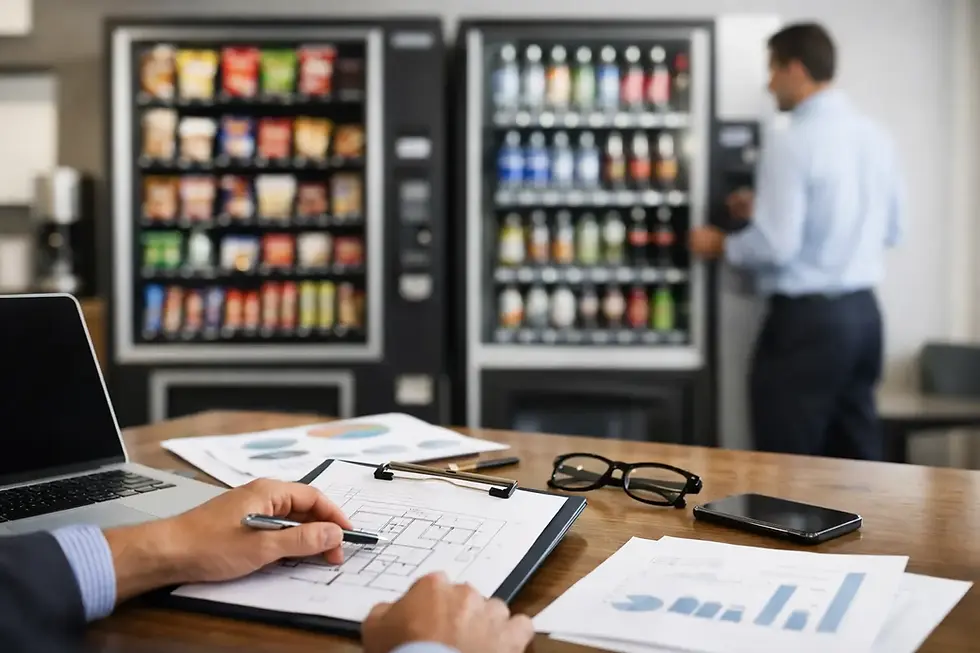
That is why modern vending works so well in workplace settings. It gives people immediate access to snacks, cold drinks, water, and other refreshment choices without requiring your team to manage inventory, collect payments, or restock shelves. For many businesses, that is the simplest path to a more functional breakroom.
The key is choosing improvements that match the way your location actually operates. A 20-person office has different needs than a medical office, warehouse, or multi-tenant commercial property. Convenience is not one-size-fits-all. It depends on foot traffic, shift schedules, nearby food access, and the expectations of the people using the space.
Start with the everyday pain points
If you want to know where convenience is breaking down, look at the moments when people leave the building, complain, or improvise. Those habits tell you more than a floor plan does.
In some workplaces, the issue is lack of variety. Employees may have access to drinks, but only a few choices that do not reflect what people actually buy. In others, the problem is timing. A nearby café may exist, but it is too far away for a short break. In shared spaces, the challenge is often consistency. A breakroom may start the week stocked and end it empty.
These are operational problems, not cosmetic ones. They are also the reason reliable vending has become a practical upgrade for so many workplaces. When machines are modern, well-stocked, and serviced consistently, they remove a lot of the guesswork from breakroom management.
Ask what people actually use
There is no value in offering refreshment options that sit untouched. If your employees prefer sparkling water, energy drinks, better-for-you snacks, or familiar name-brand products, that should shape the mix. The most convenient breakroom is the one people trust to have something they want right now.
This is one of the biggest advantages of a curated vending program. Product selection can be adjusted around real usage patterns instead of assumptions. That matters because convenience is partly about speed, but it is also about confidence. People are more likely to use a breakroom when they know it will meet their needs.
Reliability matters more than most businesses expect
A vending machine only improves convenience if it works consistently. A machine that is out of order, poorly stocked, or limited to cash payments quickly becomes part of the problem.
For business owners and facility managers, this is where service quality matters. The right provider does more than place equipment. They keep it operating properly, maintain product levels, and make sure the experience stays easy for the people using it. That reliability is what turns vending into a workplace amenity instead of a recurring complaint.
There is also a staffing benefit here. If your internal team is spending time troubleshooting breakroom issues, tracking supplies, or fielding complaints about limited options, that is time pulled away from higher-value responsibilities. A dependable vending service reduces that burden.
Make access easier with modern payment options
One of the fastest ways to improve breakroom convenience is to remove payment friction. Many employees do not carry cash, and visitors are even less likely to. If the only available option depends on bills and coins, usage will drop.
Cashless payment is now a basic expectation in many workplaces. Card and mobile payment options make the breakroom more usable for a wider range of people, especially in office environments where speed matters. Someone grabbing a drink between calls or before a meeting does not want an extra step.
This is a simple detail, but it changes behavior. When refreshments are easy to access and easy to pay for, people use them more naturally as part of the workday. That is the kind of convenience employees notice without needing it explained.
Layout still matters, even in a small breakroom
Not every convenience issue is about product access. Sometimes the room itself slows people down. If machines block movement, counters stay cluttered, or the space feels cramped during peak times, the breakroom becomes less inviting.
A better layout does not have to mean more square footage. Often it means organizing the room so people can enter, make a quick selection, heat food, and move through without bottlenecks. If you are adding vending, placement matters. Machines should be easy to reach without interrupting seating or appliance use.
It also helps to think about separate use cases. Some people want a quick grab-and-go option. Others want to sit for ten minutes and reset. A convenient breakroom can support both, even if the footprint is modest.
Don’t ignore the role of variety
A breakroom that only serves one type of preference stops being convenient for a large part of the workforce. Not everyone wants candy and soda, and not everyone is looking for strictly health-focused products either. Most workplaces need a balanced mix.
That means familiar snacks, cold beverages, water, energy drinks, and healthier options should all have a place when demand supports them. Variety matters because the workday is not static. What someone wants at 10:00 a.m. may be different from what they want at 3:00 p.m. The best breakroom setups account for that.
There is a trade-off, though. More variety only helps if the machine stays organized and stocked with products people actually choose. Too many low-demand items can create the appearance of choice without improving convenience. Good product planning is more useful than simply adding more SKUs.
How to improve breakroom convenience over time
The most effective breakrooms are not set up once and ignored. They are adjusted based on use. If certain items sell quickly and others sit, that is useful information. If employees ask for more bottled water, a different snack mix, or easier payment options, those requests are worth paying attention to.
Convenience is a moving target because workplaces change. Headcount shifts, visitor traffic changes, and employee preferences evolve. A breakroom that worked well last year may need a few updates to stay effective now.
This is where working with an experienced local provider can make a real difference. A company like K & A Vending Solutions LLC understands that Atlanta-area businesses need more than a machine in the corner. They need dependable service, modern equipment, and product choices that make the workplace feel easier to navigate every day.
Focus on fewer hassles, not more features
It is easy to overthink breakroom upgrades. Fancy finishes and oversized plans may look appealing, but convenience usually comes down to something simpler: Can people get what they need quickly, reliably, and comfortably?
If the answer is yes, the breakroom is doing valuable work. It supports employee satisfaction, reduces unnecessary trips offsite, and makes the workplace feel more considerate and functional. For business leaders, that is not a small improvement. It is an operational advantage that people feel every day.
The best next step is usually the practical one. Fix the friction people deal with most, make refreshment access easier, and build a breakroom people can actually count on.


Comments